
Creating Belonging for Learners in Museums: Part 1
ON BELONGING
I don’t know about you, but I think it’s pretty awesome that we’ve gotten to a point in our evolution as humans that we now talk a lot about belonging.
As an east-coast Gen Xer, “belonging” is one of those terms, like “mindfulness” or “healthy fats”, that just wasn’t even in my vocabulary until well into adulthood. But I’m so grateful these are things we know about now, because belonging is key to learning, and life is too short for fat-free margarine.
What does it mean to feel belonging?
Put simply, to feel belonging is to feel safe, like you can let your guard down. You feel your authentic self is allowed, and even better, wanted. And perhaps the strongest sense of belonging comes from feeling that your authentic participation is allowed, and even better, wanted.
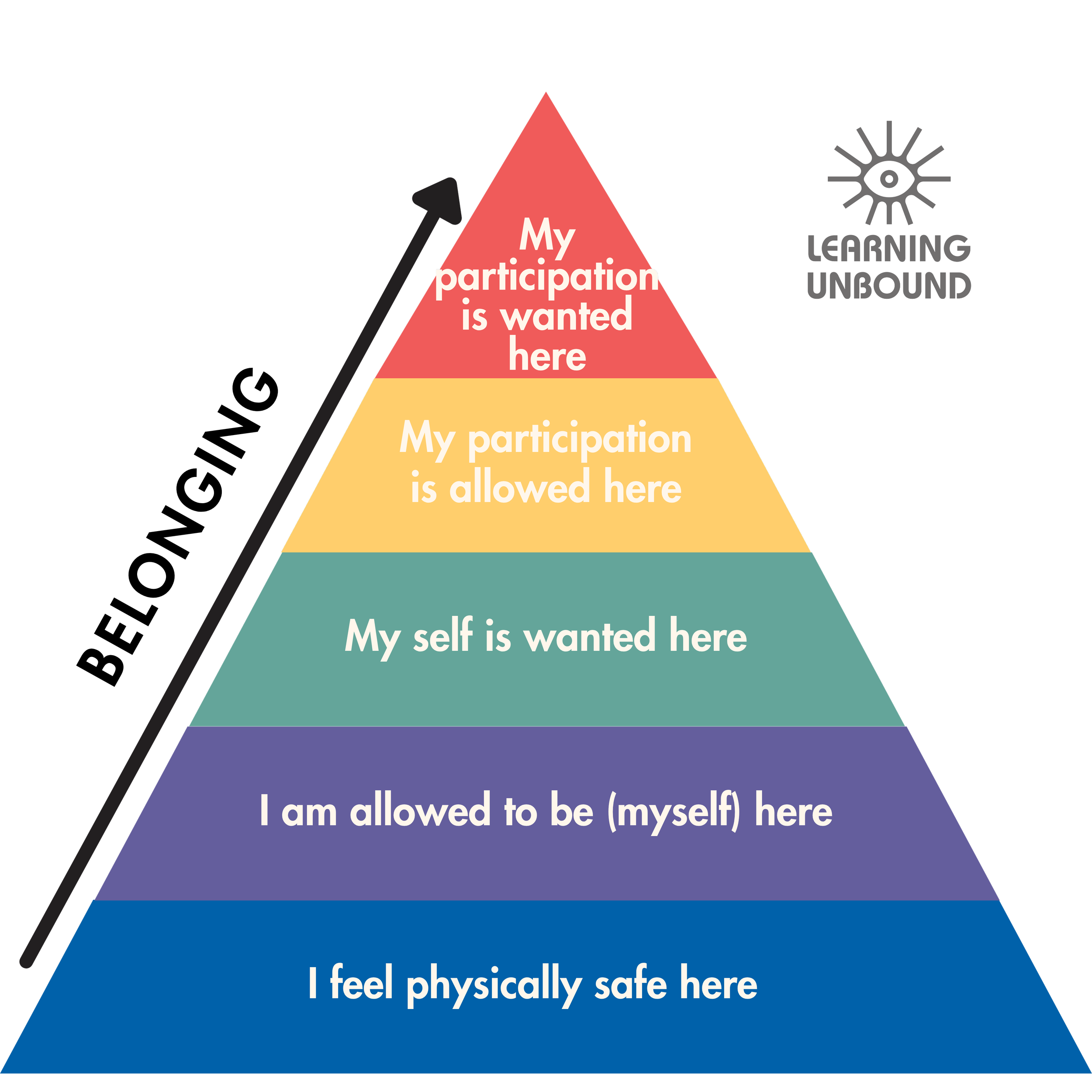
I created this hierarchy as I was writing this piece. It feels true to me. Does it feel true to you? I invite you to poke holes :)
Why is belonging important for learning?
Learning - and being willing to engage in new experiences, as we want learners to do when they come to our spaces - is the work of our brains’ prefrontal cortex. That’s the part that does sophisticated stuff like reasoning, problem solving, decision making.
If we don’t feel safe, the amygdala takes over. That’s the part that is focused on survival: fight, flight, freeze, etc.
The amygdala treats perceived threats as actual threats because “Better safe than sorry” is its MO. In addition, as far as the amygdala is concerned, social safety (e.g., looking cool in front of your friends) is basically the same as corporeal safety (e.g., not being eaten by a bear), because the amygdala was trained when social exile meant losing the necessary protection and support of our human troop (and probably getting eaten by a bear).
So, if a learner doesn’t feel safe in your museum - even if it’s just a perceived lack of safety - they are literally not going to be in the right headspace to learn.
They’re also not going to go home and tell their families how much they loved visiting your museum and how they should all go back together this weekend and every weekend and leave all their money to the museum in their wills. Just saying.
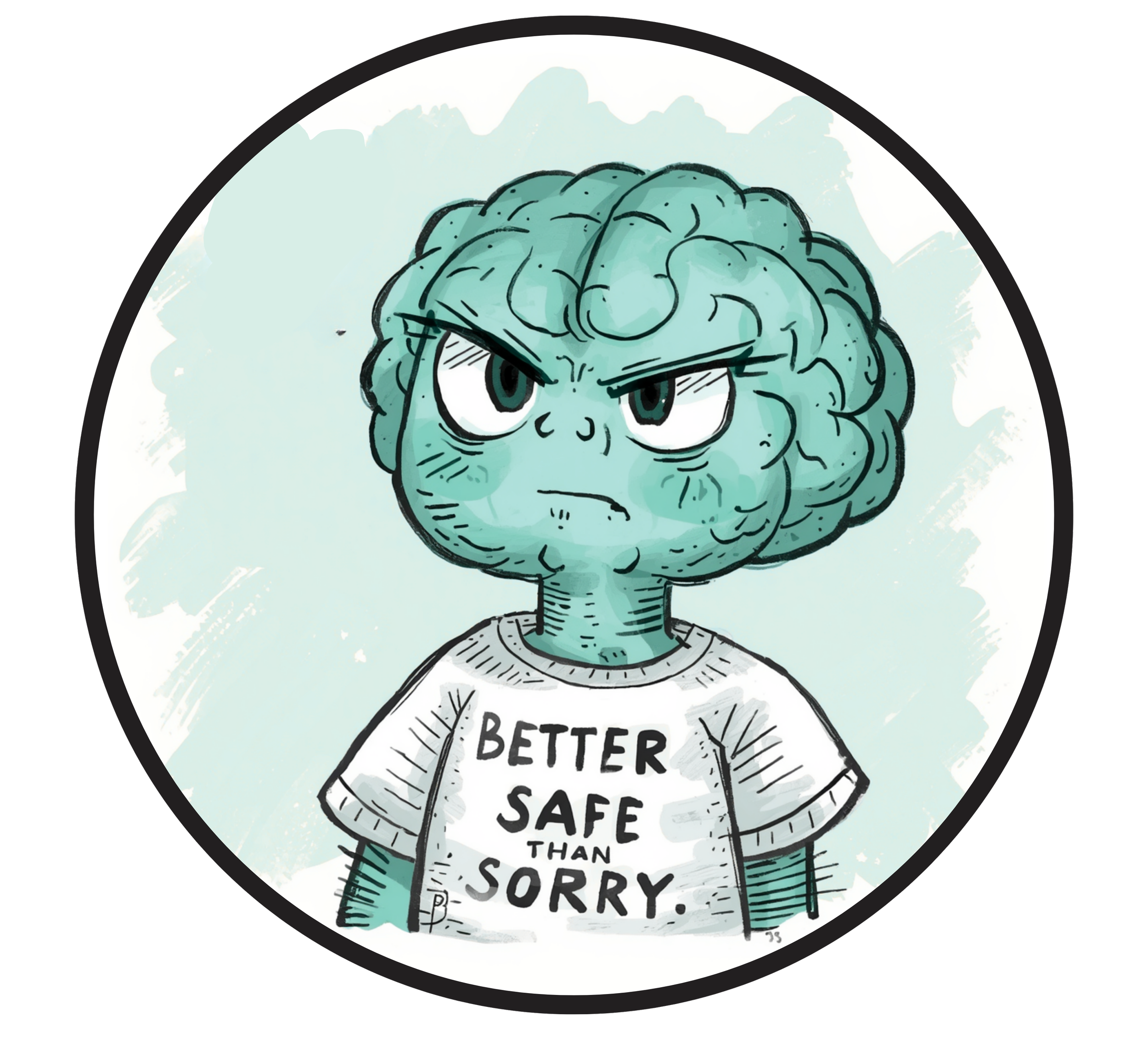
AMYGDALA TRUSTS NO ONE.
Creating Belonging, Part 1: Educator Mindset
There is a lot to say about creating belonging, so I’m going to make this a two- (or three-)parter. Today I’ll focus on what I think is the most important “trick” to creating belonging for learners in your museum.
Here it is: You have to really want to create belonging for learners in your museum.
Not only in the abstract sense, when you’re planning for anonymous individuals, but in reality, in the moment, when real individuals are in your space.
And especially when those real individuals are talking over you and making a mess in the bathroom and throwing well-aimed wrenches into your beautiful, belonging-filled plans.
Because chances are, when those wrenches are being thrown, YOUR amygdala is flexing. (Ooh, plot twist!)
Trust me, I know the feeling. For many years as an educator, I could not handle what I perceived as threats to my capability, my control, or my status as an Adult Who Deserves Respect.
Even though I would never have consciously recognized it, protecting my ego was my number 1 priority. If connecting with the learners in front of me happened organically, life was great. If it didn’t, and I felt the threat of appearing weak, or bad at my job, my amygdala took over.
But that connection, or lack of it, seemed like the luck of the draw (“good” kids and “bad” kids, amirite? (Please banish that concept from your mind if you find yourself employing it. It’s a fallacy. And it’s a self-fulfilling prophecy. Entirely unhelpful.)).
A shift started to happen one week when I was working with middle schoolers. I don’t remember what prompted it - maybe just reflecting on the horrors of being that age and feeling some compassion - but I showed up one morning deciding I was going to love them.
It was kind of amazing. Suddenly their behavior didn’t feel personal. I was able to see them as middle schoolers being middle schoolers, not evil demons determined to make me look bad. The blood left my head and resumed its normal flow, and I could feel my heart relax.
My amygdala chilled out because I stopped seeing middle schoolers as threats. When I shifted my focus to caring for them, rather than protecting myself, I was able to feel safe.
Once my prefrontal cortex was back online, I had the capacity to put something into practice that I had heard so often but never really understood: Meeting learners where they’re at.
Which brings me back to my lil belonging hierarchy pyramid from the top. Remember her?
A major part of belonging is feeling accepted and valued for who we are.
When we struggle with learners, actively or passively, trying to get them to be the idealized versions of themselves that we had in our head while we were planning, the message they get is that their actual selves are somehow wrong.
Now, I need to make the REALLY SUPER IMPORTANT point that meeting learners where they are and valuing them for who they are DOES NOT MEAN lowering your expectations for what they are capable of. I’ll say more about that some other time, but for now, just hear that, and remember it. And if you’re curious, start here.
Are there things you can do in your planning and facilitation to increase learners’ feelings of belonging at your museum? Definitely. Stay tuned for more on that.
For now, your homework is to pay attention to what comes up for you when you are with learners. Notice:
Do you feel feelings of warmth and connection towards some learners, but not others?
When you don’t feel connected, what are you experiencing in your body? Are there signals that you are in fight/flight/freeze/fawn mode? (You probably won’t recognize this until after the moment has passed - that’s OK! With practice, you’ll start to catch it in the moment.)
What happens when you use a mantra like, “This isn’t about me”?
What happens when you make a conscious choice, before learners even show up, to accept and value their authentic presence and their participation?
Let me know how it goes!